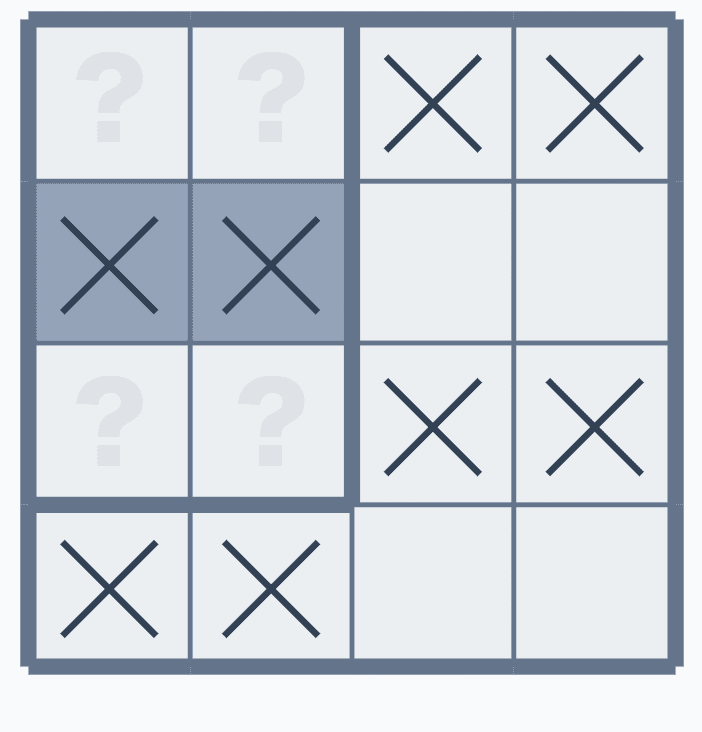
Elimination Strategies
Learn some effective elimination techniques for Murdoku puzzles.
- 1
Single Remaining Cell
If a row or column must contain a character and every other cell has been eliminated, the remaining cell necessarily contains some character (undetermined).
Example 1Before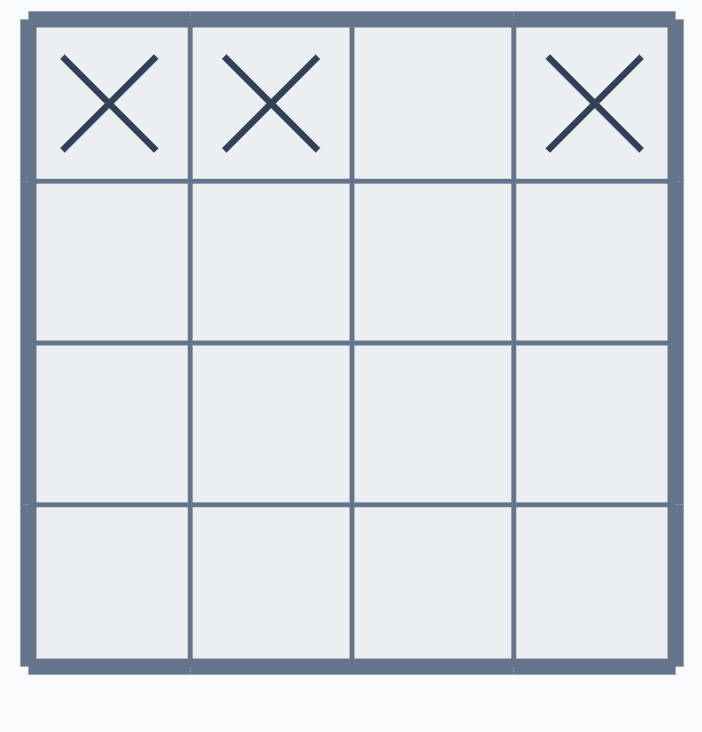 After
After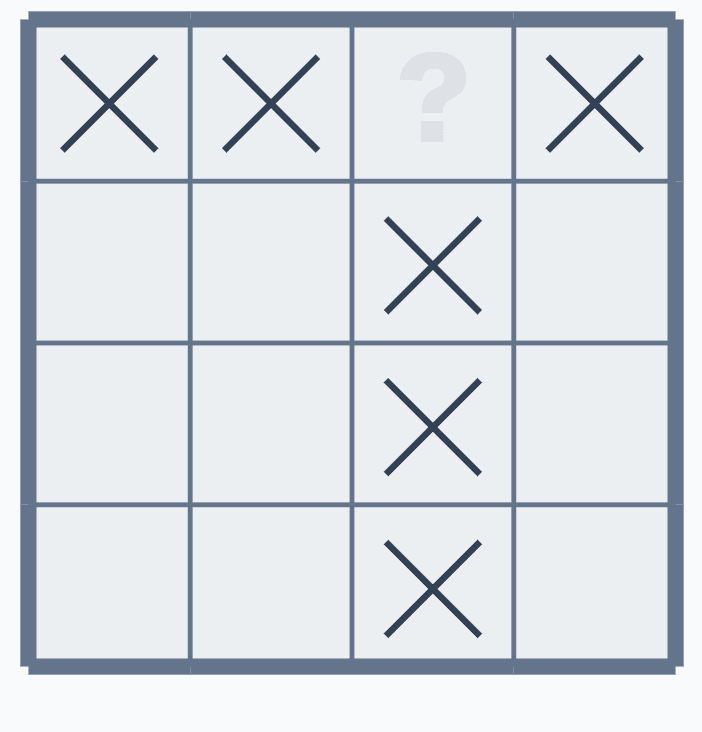 Example 2Before
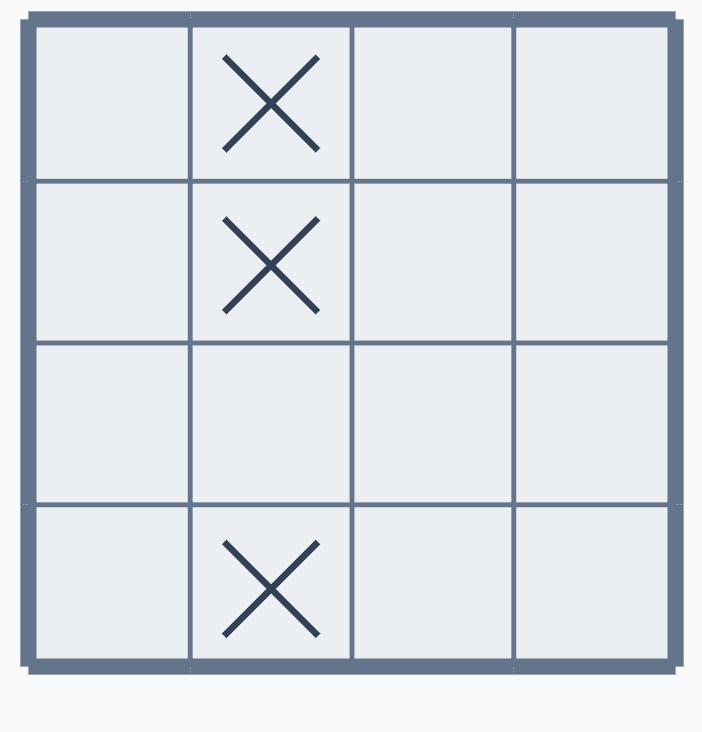 After
After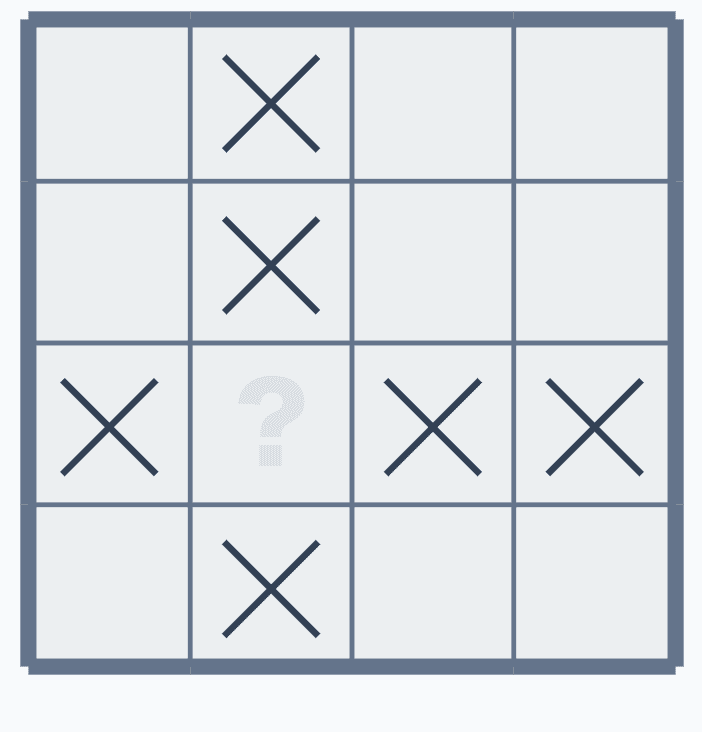
- 2
One-Dimensional Positions
If all valid positions for a character lie in a single row or column, all other characters can be removed from that row or column.
Before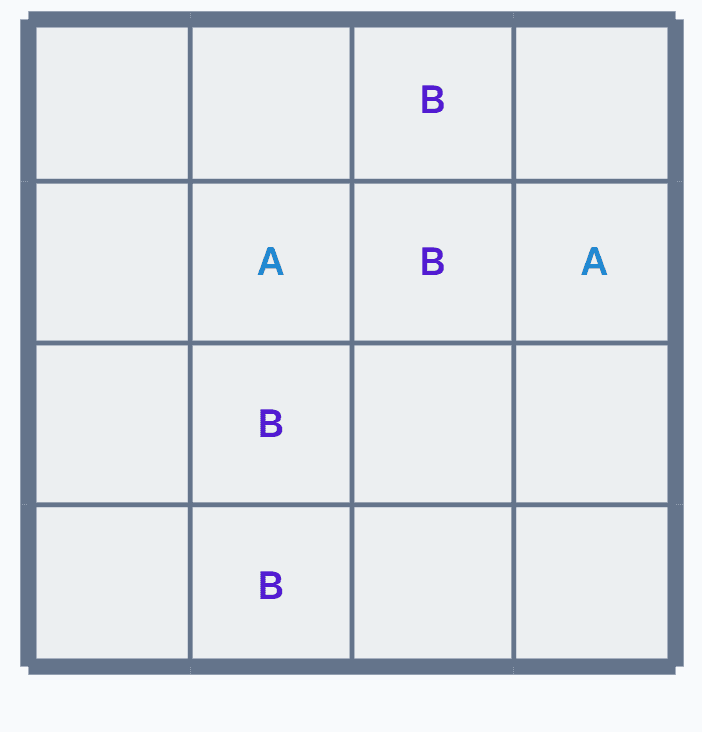 After
After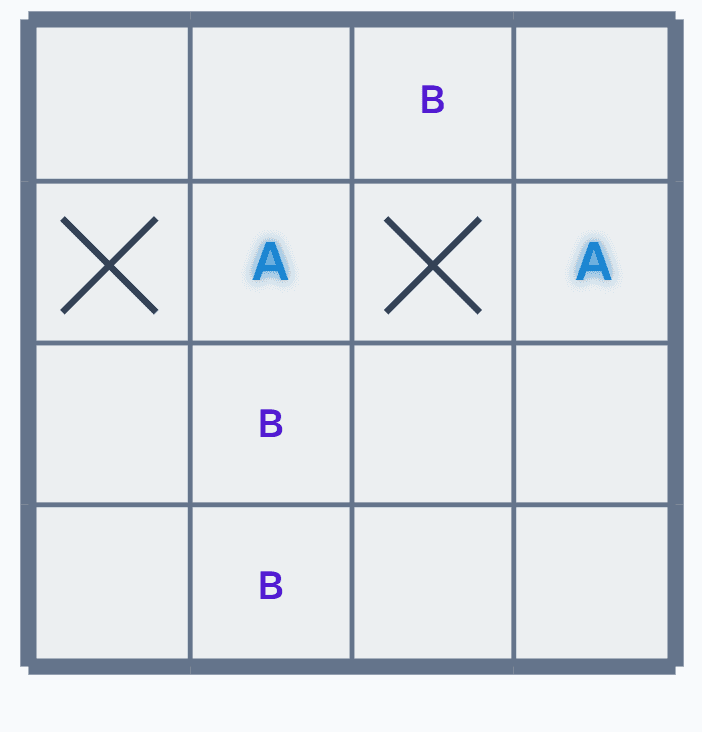
- 3
Square Intersection
When a character has only two possible positions and they form a square pattern, you can eliminate intersections.
Before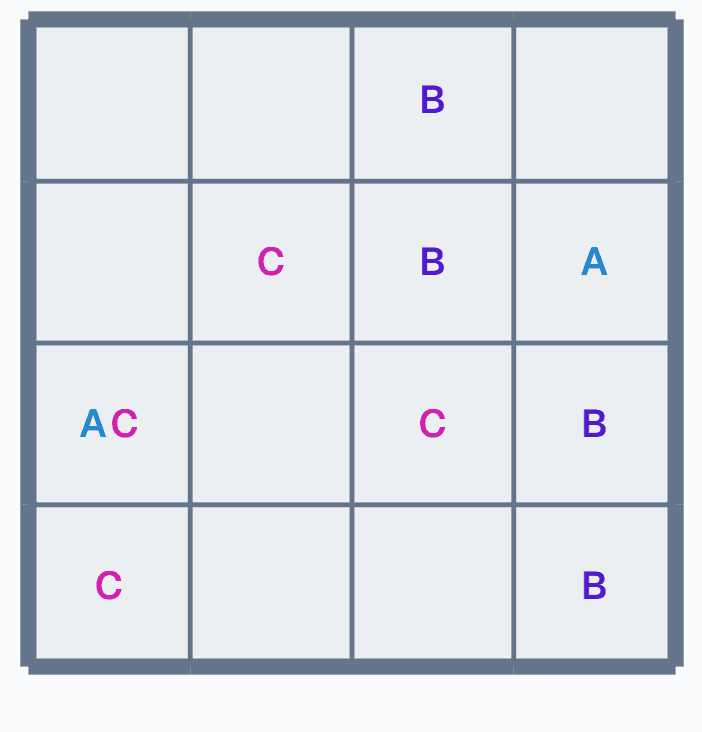 After
After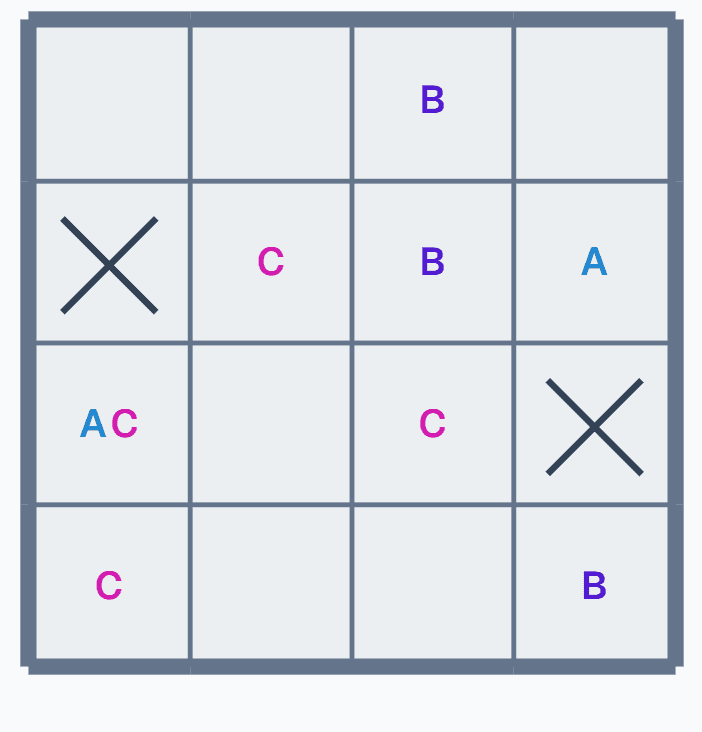
- 4
L Intersection
When a character's possible positions form an L-shape, the intersection of those rows and columns can be eliminated for other characters.
Example 1Before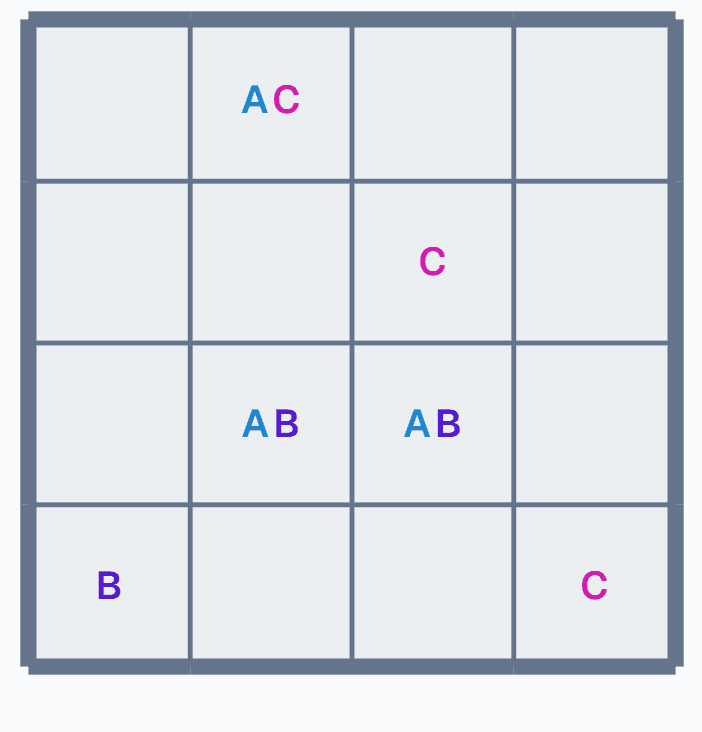 After
After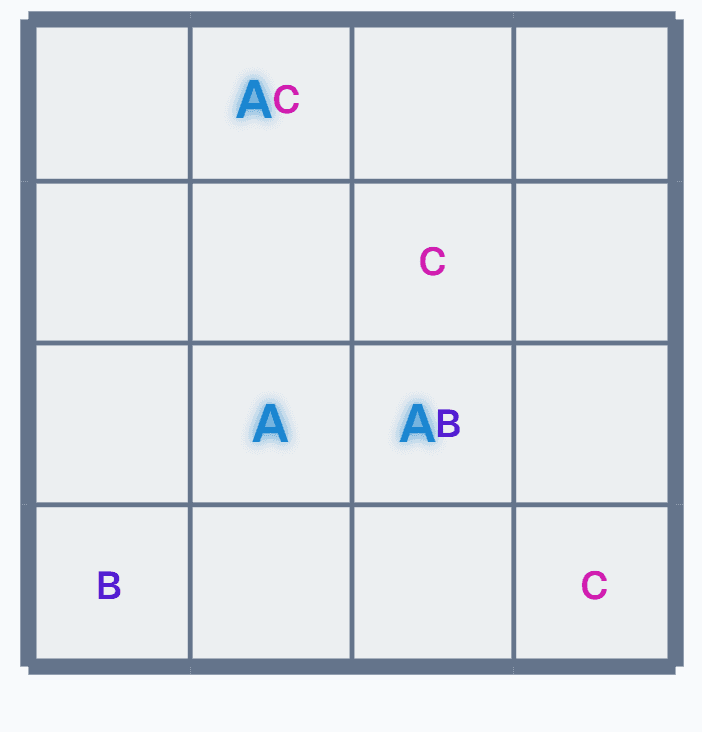 Example 2Before
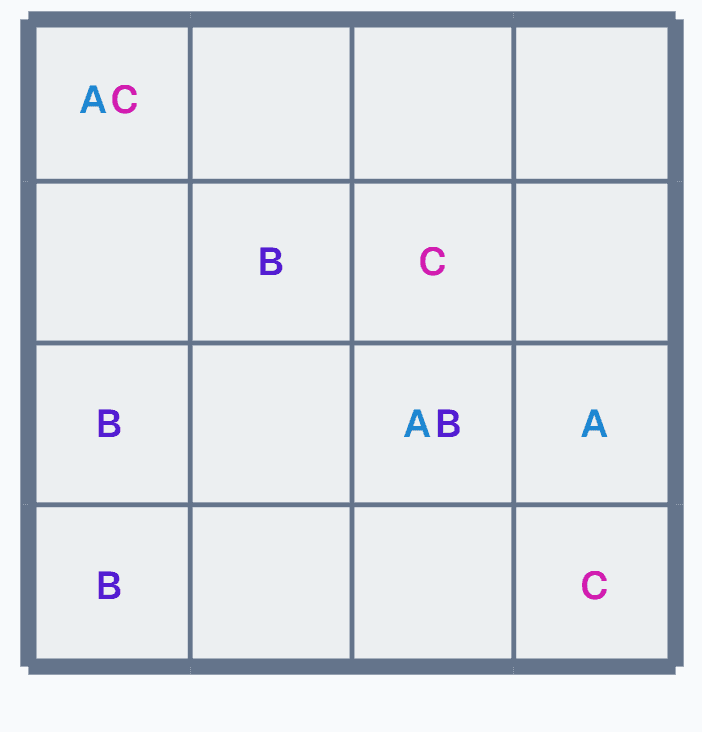 After
After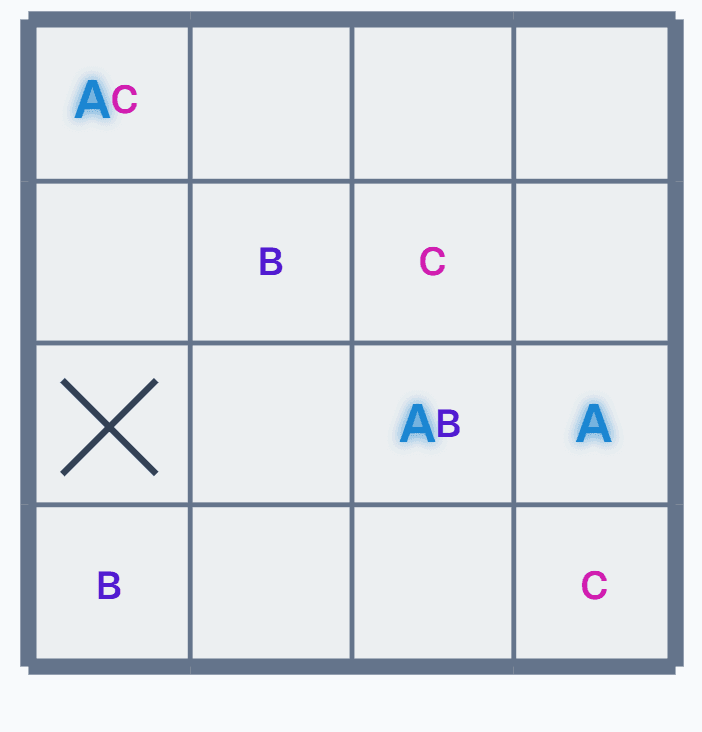
- 5
Cross Intersection
When a character's positions form a cross or T pattern across a row and column, the intersection point can be eliminated for other characters.
Example 1Before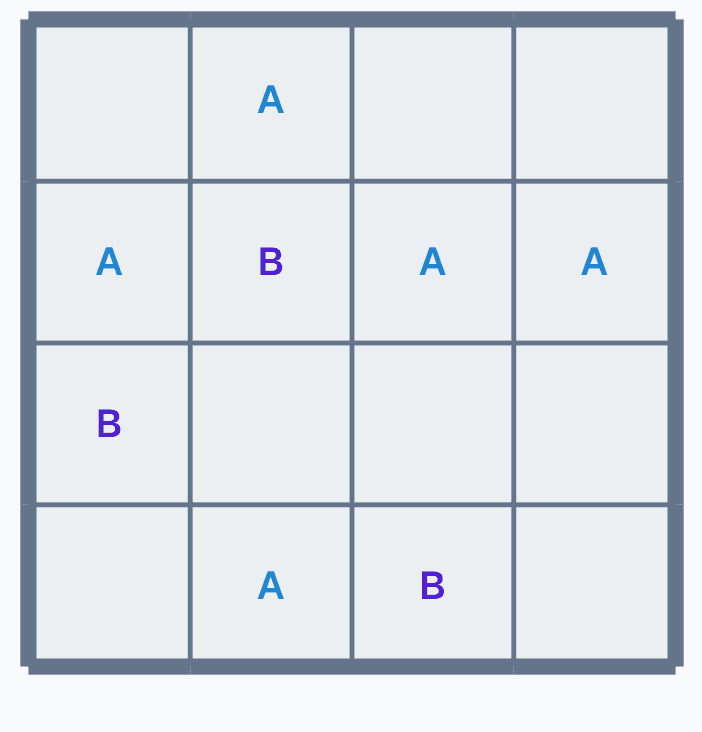 After
After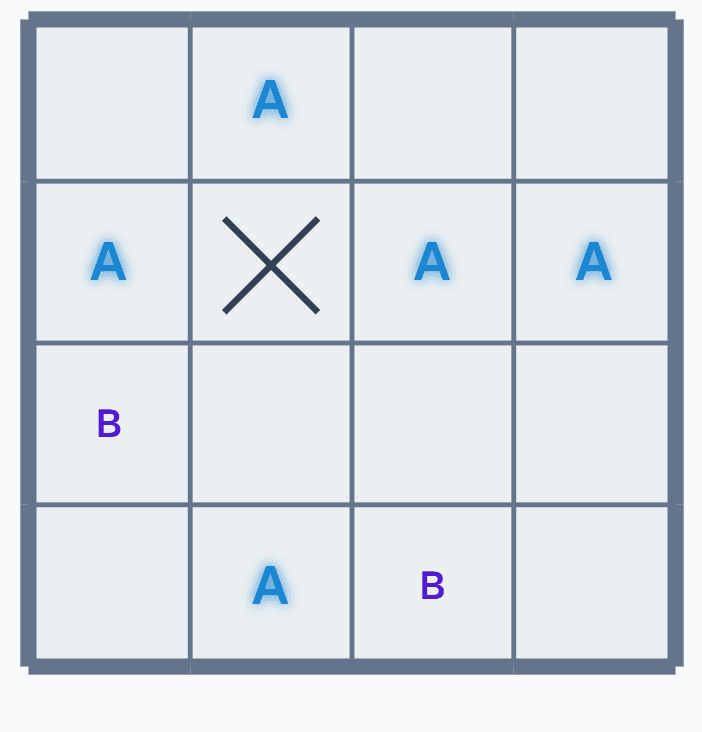 Example 2Before
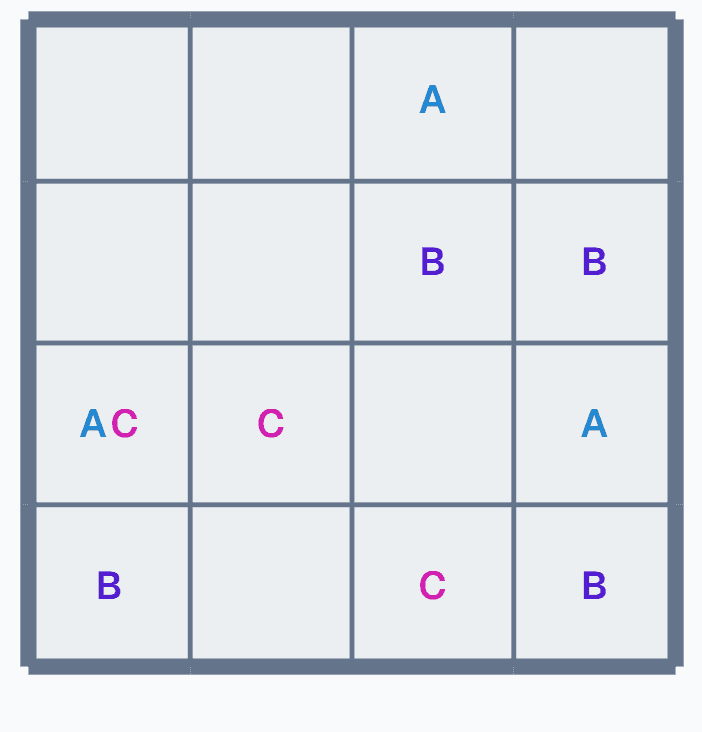 After
After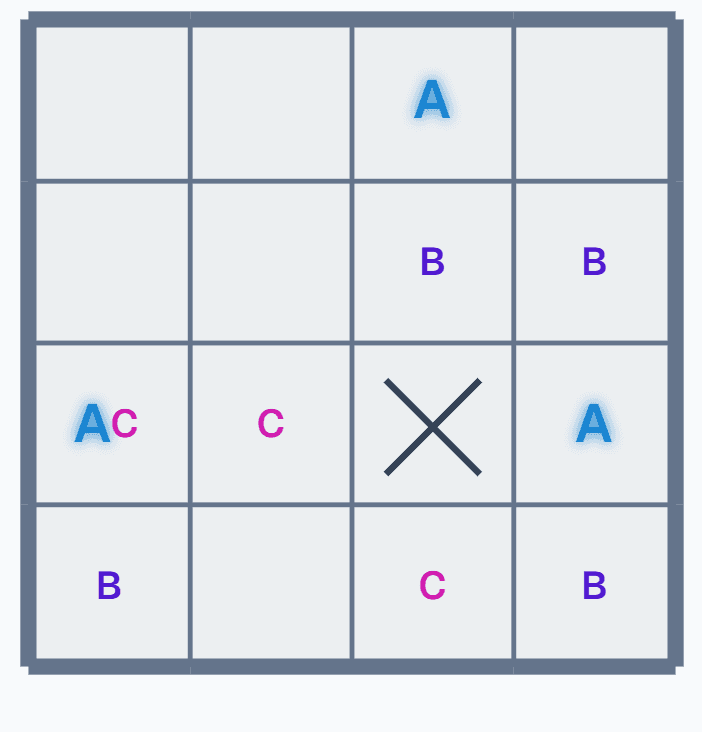
- 6
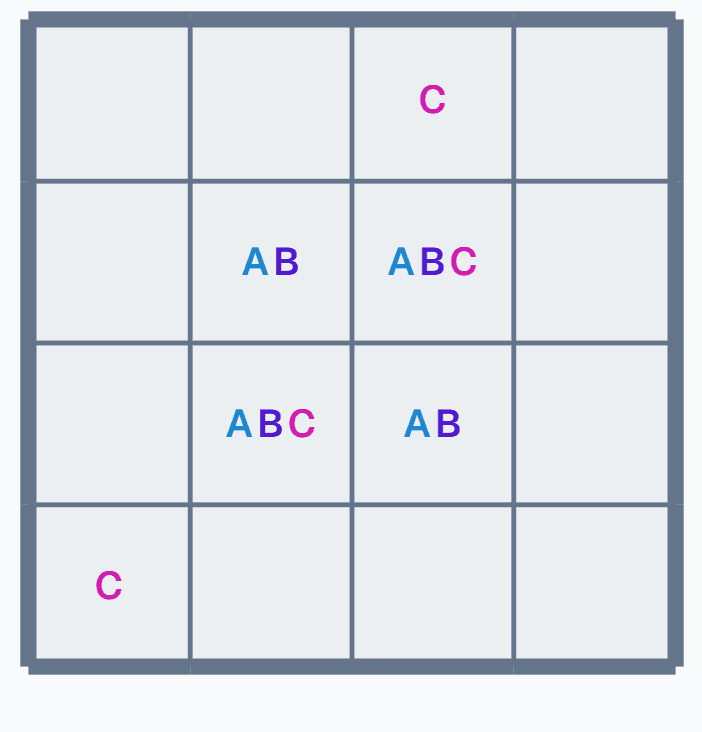
Locked Pair
If two characters can only occupy the same two rows or columns, no other character can use those positions — eliminate every other character from those rows or columns.
Example 1Before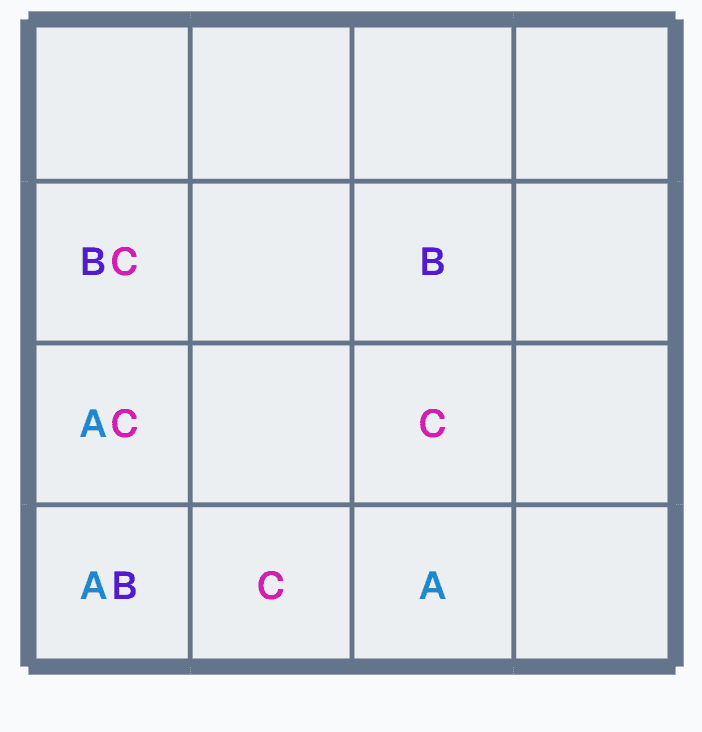 After
After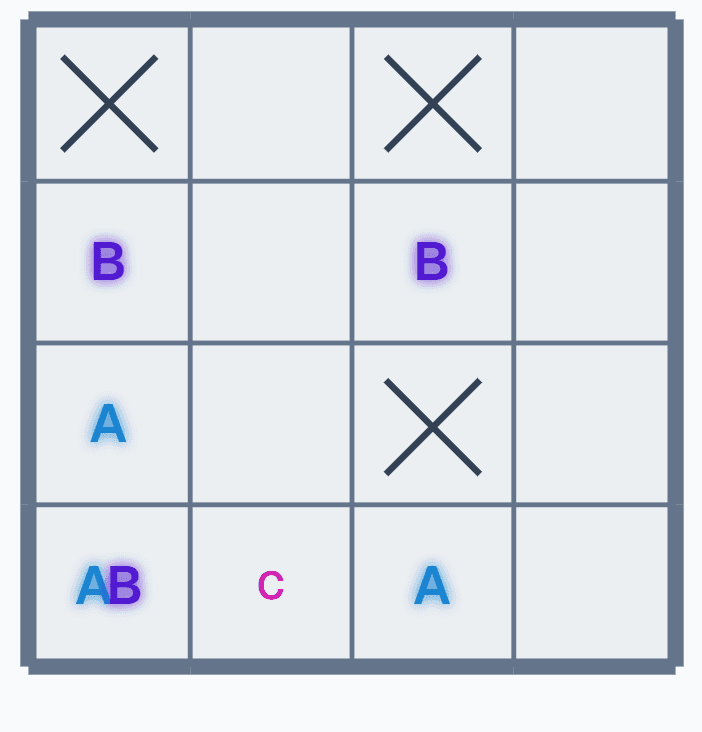 Example 2Before
 After
After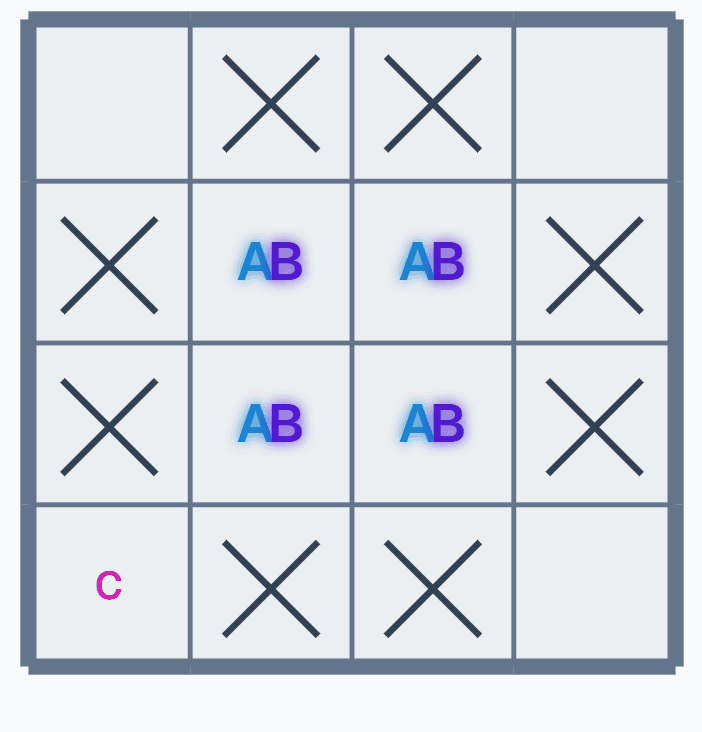
- 7
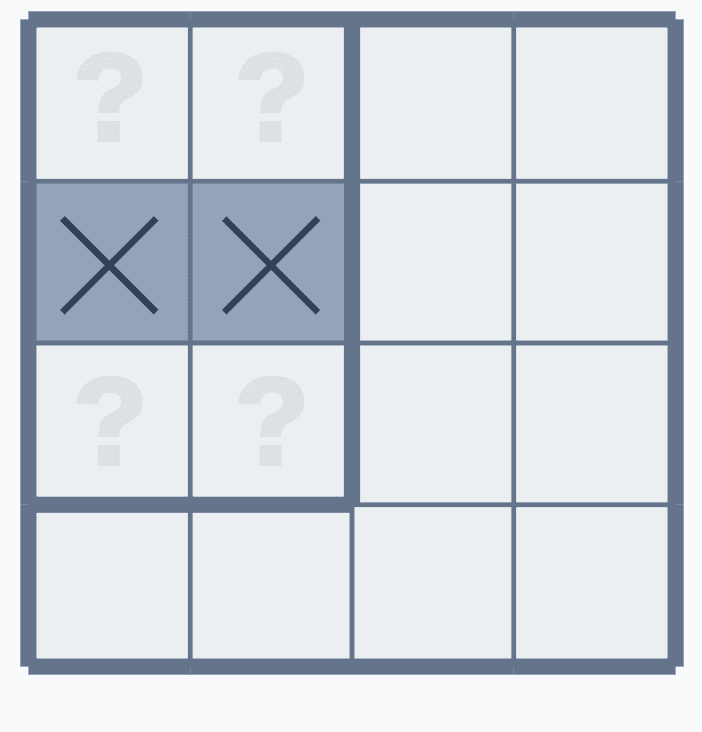
Full Area Occupancy
If an area must contain exactly N characters and the area spans N rows or N columns, cells outside that area in those rows or columns can be eliminated. Examples: "Briana was only with Derek", "One of the rooms had two characters" (sometimes logical deduction is required).
Example 1Before After
After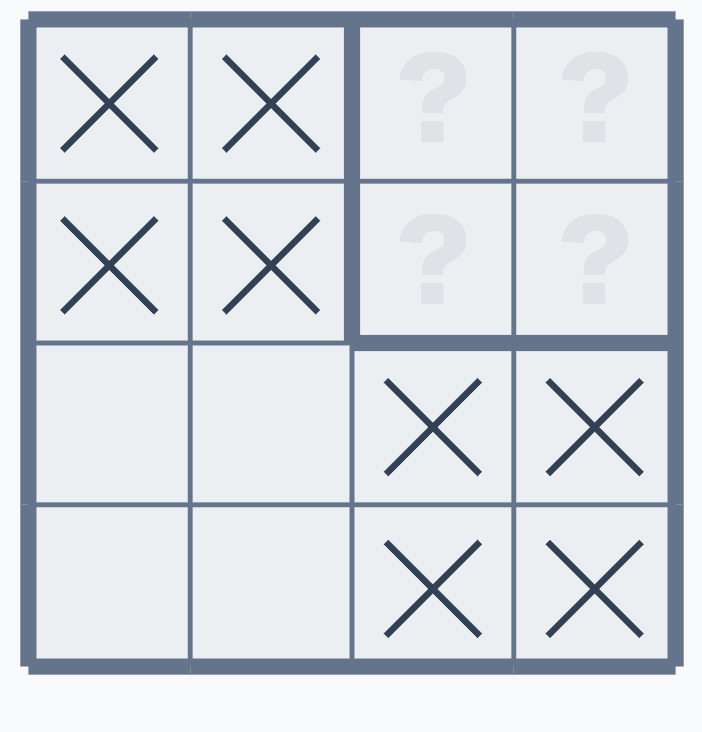 Example 2Before
 After
After